Sunday, February 28, 2016

Counter-Strike: The Growth of Competitive Gaming

Gaming is no longer just a hobby for the interested few. The industry has grown over the years, and the Entertainment Software Association reported in 2015 that 155 million Americans, almost half of the population, plays video games. Because of the growing popularity of gaming, it has become a viable source of income. YouTuber's and Twitch streamers can make millions entertaining people by sharing their gameplay videos. 

While many gamers gain fame due to their personalities, there are also those acclaimed for their talent. As with sports, there has emerged a professional class of gamers who participate in competitions around the world, showcasing their skills and building fan bases that rival even those of national sports teams.


Counter-Strike: Global Offense (CS:GO), is a popular first-person shooter that has gained a lot of interest over the past year. According to PC Gamer's report on Twitch, CS:GO was the second most watched game in 2015, and it was also the second most played game on Steam. Just today, the game peaked at 677,135 players, which is almost ten times the amount of the third most played game. 

CS:GO has no campaign and, instead, focuses on multiplayer modes. The most popular mode, Competitive, pits two five-man teams against each other. The terrorists attempt to arm a bomb and destroy a site, while the counter terrorists try to kill the enemy team and defuse the bomb. Because teamwork and strategy play such a big role in this mode, Competitive is perfect for entertainment sports.  

Valve has recognized the growing interest in the game and has promised a $1,000,000 prize pool for the next Major tournament. In fact, on February 23, Valve announced that after MLG Columbus 2016, the prize pool for all Majors will be $1,000,000, a hefty sum for a tournament of any kind.  MLG Columbus will also be the first Major held in North America. 

Those aren't the only changes being made to the CS:GO community. FaZe Clan, a gaming group made popular by their Call of Duty team, recently stepped onto the CS:GO scene and bought up the team G2Games for $700,000. This became the most expensive team purchase in CS:GO history, according to Daily Dot

This kind of financial support helps legitimize gaming as a profession. One cannot deny that gaming has become a sport, an entertainment sport, but a sport nonetheless. It is possible to make a living now playing games, which is a concept that surprises most people who do not follow the gaming industry. The fact that players can compete in a professional environment with real money on the line hopefully means that the stereotype of the lonely nerd gaming in his/her parents' basement will soon be forgotten. Instead, we should start recognizing these professionals as the skilled players that they are.

Sunday, February 21, 2016

Video Games as News: Sensationalism and Journalism Ethics

According to The Observers, a site run by French news site France 24, Iranian state television stations have been showing footage from the 2010 video game Medal of Honor, while claiming it is real footage of a sniper killing six ISIS members. The Observer reported on February 17 that the footage was accompanied by headlines claiming the sniper was Hezbollah.


The video, also shared by another press agency Mizan News, included fuzzy footage from what appears to be the shooter's point of view and voices speaking in Arabic. As The Observers points out, the video is identical to a scene from Medal of Honor. The only difference is that the contrast has been altered, and it seems like someone used a camera to record the gameplay as it was displayed on a computer or television screen, making it fuzzy and out of focus.

As a blogger who reports on video game related news and controversies, I have two issues with this story. One, this was simply bad reporting on the part of the Iranian press. It is unclear if they fabricated the video or were simply duped, but either way, they did not check their sources. If they were tricked, than it was because they were rushing to release the story and did not pay close attention to the video. A few things point to this being fake, such as the notification that appears at the bottom of the screen that indicates a player made a head shot. While I am not weapons expert, I do not know of any sort of technology implemented into a scope that can tell the shooter when they've hit the enemy's head.

The second problem I have with this footage is the intent with which it was shared. The release of this footage calls to question the idea of sensationalism in the news. Was this just a ploy to gain views? The reason gamers share videos like these, frag montages, is to show off their skill at killing. It would seem that the intent was the same here, to show a successful sniper in action. However, there is a big difference between six virtual characters made up of pixels and six real people made of flesh and blood. While reporters certainly have a duty to report news and share pertinent information with their country, I do not necessarily see the need to share a video like this if it were real.

It would seem that there is a trend in the news these days: who can shock the most people? While a video like this would certainly be shocking, does it have informational value? A report could convey the same information, but it would not bring in as many viewers. While it is important at times to shock your readers and make them uncomfortable when told the truth, I fail to see how this video, which glorifies the skills of the sniper, would offer any sort of informational value.

Saturday, February 13, 2016

Assassin's Creed: Will This Historical Game Have a Future?

Image source: http://kotaku.com/sources-next-big-assassins-creed-set-in-egypt-skippin-1750937895


Two days ago on February 11, 2016, game developers Ubisoft announced that they would not be publishing a new Assassin's Creed game in 2016. After the release of the first game of the series in November of 2007, Ubisoft has consistently released a game every year, totaling 9 full-length titles as of 2015. But this year, Ubisoft claims it is "re-examining the Assassin's Creed franchise." 

What does this mean for lovers of the series? Well, it is hard to say. Ubisoft has not made any claims in regards to whether they will continue with the series, but they have been having some issues lately with consumer feedback. 


While the early Assassin's Creed titles were widely popular, selling a million copies easily in the first week, the most recent game, Assassin’s Creed Syndicate, had a slower start. Compared to the title from 2014, Syndicate did not sell as many copies within the first week, something publishers admitted after the launch. 

Ubisoft attributed the first-week failings to the release of Assassin’s Creed Unity, which had a whole host of problems that gamers were not too shy to complain about. These problems effected the most basic of gameplay experiences, even dropping the frame rate and occasionally crashing the game. It was these failings that most likely made people hesitant to buy the next title.

However, Ubisoft learned from the disastrous release of Unity and Syndicate received fair praise with little complaint. Still, the fact that no new Assassin’s Creed game will come out in 2016 could indicate that the franchise is slowing down. Perhaps this popular series, which has rivaled even Call of Duty in number of titles, might be nearing its end.

Sunday, February 7, 2016

H1Z1: The Good, the Bad, and the Ugly

Image source: http://goo.gl/JCX19s


Fans of the survival/first-person shooter game H1Z1 will be pleased to hear that after spending over a year in early access, some of the game will be released on PC, Xbox One, and PlayStation 4 in the summer of 2016. 

According an announcement from the the game's developer, Daybreak Game Company, the game will actually be split into two parts: Just Survive and King of the Kill. This split  spawned from the original game's differing modes that all gained favor within various groups of gamers. H1Z1: Just Survive will consist of the survival mode from the early access version where the focus is on killing zombies and navigating the post-apocalyptic world whereas H1Z1: King of the Kill will include the player vs player modes like the popular Battle Royale.

The split will officially take place on February 17, 2016, and players can still purchase the combined title until then. Those who have the combined title will receive both copies of the split game on the 17th. But for those who only want to purchase one part of the game, they can do so after the 17th for $19.99 on Steam. However, since the combined version is $19.99 on Steam now, players might want to consider purchasing the title before the split. 

Daybreak Game Company has also assured that any in-game items players own will transfer over to the new version so players don't have to worry about losing their items. The in-game transactions will still play a part in both games for PC, so players will still be able to sell and buy game items as they wish. 

Now for the bad news. While H1Z1: King of the Kill is set to come out of early access this summer (already a vague release date), the developers have not made any promises about H1Z1: Just Survive. Already players have been waiting over a year for the official release, and it looks like they still have quite a wait ahead of them. 

And the ugly? Well, the reason behind so many players waiting for the game's official full release is because the game was supposed to be a free-to-play title once out of early access. Early in 2015, president John Smedley of Sony Online Entertainment (now Daybreak Game Company), claimed on reddit that the game would eventually be free to play. However, Day Break Games has stated in their game release announcement that they do not intend to make H1Z1 free after all. 

While I anticipate that fans of the game will be exited about the release on consoles and even the splitting of the game (it seems most people play one mode or the other), I have a feeling some will not be so pleased that they will have to pay $39.98 (at least for early access after the 17th) for the whole package after waiting over a year to play it for free. While companies certainly need to make money from their products, one has to wonder whether Day Break Gaming is simply taking advantage of the growing popularity of their game and cashing in on it. What was supposed to be free with in-game transactions to support it will now be the same price as the full early access title, for only half of the game. Will it be worth the money? Players will have to wait until the 17th to find out. 


Sunday, January 31, 2016

Smite Character Update: A Change in Female Representation?

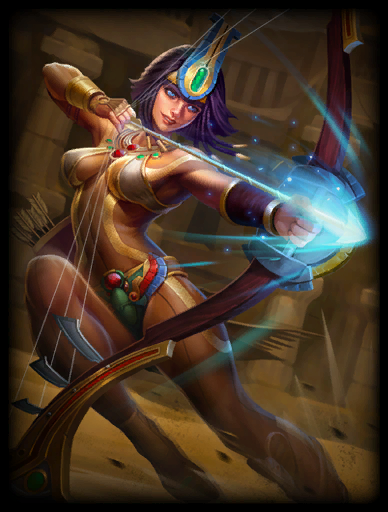
Smite is a fast-paced, multiplayer online battle arena game (MOBA) like no other that combines traditional MOBA themes, objectives, and gameplay with a third person perspective twist. Smite, released in 2014, is still growing in popularity and still adding new characters to the list of gods and goddesses one can choose to play as. However, these characters, specifically the female characters, have been criticized by many for being unnecessarily sexualized. Here are just a few examples of female Smite characters with ample cleavage and strategically placed clothing.

Neith: Egyptian goddess (image source: http://smite.gamepedia.com/Neith)

Freya: Norse goddess (image source: http://smite.gamepedia.com/Freya)

Creative Commons License
Nu Wa: Chinese goddess
Nu Wa Fan Art by Sarah Doran is licensed under a Creative Commons Attribution-NonCommercial 4.0 International License.
Based on a work at http://www.smitegame.com/gods/nu-wa/.

While the male gods of the game are more varied in terms of body type and sexualization level, there is less variety when it comes to the female characters.The large breasts and revealing (and impractical) clothing of almost all the female goddesses have people saying these characters are simply designed to pander to the game's perceived male audience. I say perceived because the gaming industry has expanded drastically. In 2015, The Entertainment Software Association reported that 44% of gamers are females. While this is a broad category including players of any type of video game, one cannot deny that more women are now part of the community.

Looking at the newest character added to Smite two weeks ago on January 14th of this year, perhaps the developers are realizing that their audience is changing. Amaterasu, a character based on the Japanese sun goddess of the same name, is a fully clothed warrior who looks no less attractive, or powerful, than any of the more sexualized goddesses.

Amaterasu: Japanese goddess (image source: http://smite.gamepedia.com/Amaterasu)

With a full armor and sword, she looks prepared for battle. Could it be that game developers are finally hearing their audience's request for better variety when it comes to female characters? We will have to wait and see, but this seems like a good step in that direction. After all, most critics of female representation in games are not looking for complete censorship. I recognize that a sexy character can be just as competent and strong as any other; I just ask for more variety so that sexuality does not become the dominant characteristic of female characters. These goddesses have lethal abilities, and it would be a shame if their bodies overshadow the creative work that went into designing thier skills and powers. But whether I'm in the mood to play as the sexy goddess Nu Wa (a personal favorite) or the tough deity Amaterasu, I will enjoy the game. I just appreciate that I am given a choice between the two.

Saturday, January 23, 2016

Let's Play: Trademark Tensions

Early this month, the gaming community went wild when it was discovered that Sony Computer Entertainment of America (SCEA) filed for a trademark of the term "Let's Play." RoosterTeeth, a popular business centered on gaming and other entertainment media posted this video on the subject. 


As they mention in the video, the public does not know what SCEA would use the term for, but the trademark application referred to "electronic transmission and streaming of video games via global and local computer networks; streaming of audio, visual, and audiovisual material via global and local computer networks." In simple terms, this trademark would apply to all videos, including live feeds, of people playing video games. 

For those of us interested in the video game culture, this trademark was quite a daunting proposal. If approved, Sony would have rights to a term that has been shared and nurtured by the entire gaming community. YouTubers such as Markiplier, PewDiePie, Roosterteeth, and many others use the term in relation to their gameplay videos. If SCEA's application were approved, this would mean all of the YouTubers using "let's play" would be violating trademark and could be fined or forced to remove their videos. However, these consequences would only come about if SCEA were to file claims against the thousands of channels on Twitch and YouTube that use the term to title their videos.

Luckily, SCEA's application has been denied, but not for the reasons you would think. According to Paul Tassi from Forbes, the trademark application was denied not because of the Internet uproar it caused but because a company already trademarked the term "Let'z Play" which could cause confusion. 

However, if the preexisting trademark for "Let'z Play" did not exist, would the United States Patent and Trademark Office approve SCEA's application? This question has yet to be answered (SCEA still has time to file an appeal), but the initial application has brought up an important concern. How can we as a community protect this term? The majority of gamers it seems are perfectly content sharing the phrase. Perhaps a company could trademark "Let's Play" on behalf of the community. Perhaps that was what Sony was intending all along, to use the trademark, but not bring lawsuits against gamers who also use the term. 

This controversy brings to light the importance of slang in different communities. Terms like "top frag," "grinding," "camper, and "Let's Play" add to the rich jargon used by gamers everywhere. These phrases bring the community together and act as a sort of code, allowing us to recognize a similar passion in each other. They belong to the community because they were made popular by the community. To trademark these terms could turn culture into capitol, something that would not bode well for gamers everywhere.